AI For Business Intelligence

AI For Business Intelligence — independent reviews, comparisons, pricing and step-by-step guides on Aizhi.

  • Agent Ruby

    Agent Ruby

    Agent Ruby (1998–2002) by Lynn Hershman Leeson is an interactive, multiuser work using artificial intelligence. == Description == On Agent Ruby's website, "Agent Ruby's Edream Portal," a female face moves her eyes and lips. Ruby, named from Hershman Leeson's own film, Teknolust, answers questions and often responds that she needs a better algorithm to answer questions not within her database. The work, created with AI, explores relationships between real and virtual worlds. Hershman Leeson had created an earlier version of Ruby, CyberRoberta, which was a custom-made doll with webcam eyes that interacted with the internet. The work in a gallery provides a screen and a sign inviting gallery-goers to "Chat with Ruby." == Artificial intelligence == In 2015 when Agent Ruby was exhibited at the gallery Modern Art Oxford, a review in Aesthetica Magazine described it as an artificial intelligence agent. A review in New Scientist noted that "Ruby is a fast learner, but perhaps not a natural conversationalist." A 2024 list of "25 Essential AI Artworks" published by ARTnews wrote that while "Agent Ruby's capabilities seem limited by today's standards," it was extensive for its day. == Publications and exhibitions == Agent Ruby was commissioned and displayed at the San Francisco Museum of Modern Art, Modern Art Oxford, and the ZKM Center for Art and Media in Karlsruhe, Germany. The San Francisco Museum of Modern Art (SFMOMA) presented Lynn Hershman Leeson: The Agent Ruby Files, March 30 through June 2, 2013 which presented the project server's archive of user conversations over the 12 years of exhibitions.

    Read more →
  • Digital media in education

    Digital media in education

    Digital media in education refers to the use of digital technologies to support and enhance teaching and learning processes. This includes the application of multiple digital software applications, devices, and online platforms as tools for learning. Learners interact with these technologies to access, analyze, evaluate, and create media content and communication in various forms. The integration of digital media in education has dramatically increased over time, significantly transforming traditional educational practices. When viewed through a global and inclusive lens, digital education should be guided by principles of equity, inclusion, and public infrastructure to ensure meaningful participation of all learners. == History == === 20th century === Technological advances in the 20th century, particularly the invention of the Internet, laid the foundation for incorporating technology into education. In the early 1900s, the overhead projector and instructional radio broadcasts were among the first technologies used for educational purposes. The introduction of computers in classrooms occurred in 1950, when a flight simulation program was developed to train pilots at the Massachusetts Institute of Technology. However, access to computers remained extremely limited for several decades. In 1964, John Kemeny and Thomas Kurtz developed the BASIC programming language, which simplified computer interaction and introduced time-sharing, enabling multiple users to work on the same system simultaneously. This innovation made computing increasingly accessible for educational settings. By the 1980s, schools began to show more interest in computers as companies released mass-market devices to the public. Networking further enabled the interconnection of computers into unified communication systems, which proved more efficient and cost-effective than previous stand-alone machines. This development prompted wider adoption of computing in educational institutions. The invention of the World Wide Web in 1992 further simplified internet navigation and sparked further interest in educational settings. Initially, computers were integrated into school curricula for tasks such as word processing, spreadsheet creation, and data organization. By the late 1990s, the Internet became a research tool, functioning as a vast library. By 1999, 99% of public school teachers in the United States reported having access to at least one computer in their schools, and 84% had a computer available in their classrooms. The emergence of World Wide Web also contributed to the development of learning management systems (LMS), which allowed educators to create online teaching environments for content storage, student activities, discussions, and assignments. Advances in digital compression and high-speed Internet made video creation and distribution more affordable, fostering the use of the systems designed for recording lectures. These tools were often incorporated into learning management platforms, supporting the expansion of fully online courses. === 21st century === By 2002, the Massachusetts Institute of Technology began offering recorded lectures to the public, marking a significant milestone in the movement toward accessible online education. The launch of YouTube in 2005 further transformed educational content distribution. Educators increasingly uploaded lectures and instructional videos on platforms with initiatives like Khan Academy, which was active in 2006, contributing to You Tube's role as a prominent educational resource. In 2007, Apple launched iTunesU, another platform for sharing educational resources and videos. Meanwhile, learning management systems gained popularity, with Blackboard and Canvas becoming two of the most widely used platforms with Canvas's release in 2008. That same year also marked the introduction of the first Massive Open Online Course (MOOC), which provided open access to webinars and expert-led instructions for global learners. As technology evolved, traditional projectors were gradually replaced by interactive whiteboards, which enabled educators to integrate digital tools more effectively in their classrooms. By 2009, 97% of classrooms in the United States had at least one computer, and 93% had Internet access. The COVID-19 pandemic, which forced schools across the world to close, significantly impacted education with schools shifting to distance education. Students attended classes remotely using devices such as laptops, phones, and tablets, supported by digital platforms that facilitated at-home learning environments. However, adapting assessment methods to the new learning environment posed certain challenges. A study conducted by Eddie M. Mulenga and José M. Marbán on Zambian students during the pandemic revealed difficulties in adapting to digital learning, particularly in subjects like mathematics. Similar issues were reported among students in Romania, where the transition to virtual learning presented significant obstacles in engagement and adaptability. === Post-pandemic developments === In the period following the onset of COVID-19, education systems worldwide rapidly adopted digital solutions to maintain continuity of learning and teaching. By the end of March 2020, all 46 OECD and partners countries closed some or all of their schools nationwide. By June 2020, the length of school closures in these countries ranged from 7 to over 18 weeks. These disruptions in formal education prompted governments and educators to quickly adopt digital learning. This global shift to online education highlighted considerable inequalities in digital access, although many systems struggled with inequitable access, especially in regions lacking devices, stable internet connections, or conducive home learning environments. Stimultaneously, commercial educational technology (ed-tech) companies introduced rapid digital solutions to the disruption caused by the pandemic. This led to what has been described as a "seller's market," where the urgency of implementation may cause the prioritization of availability and scale over pedagogical and equity considerations. In the post-pandemic era, digital media in education continues to evolve. It increasingly intersects with artificial intelligence (AI) technologies such as adaptive learning platforms, AI-enabled content generation, and personalized learning environments. These tools enhance global engagement and access but also raise concerns about infrastructure, inclusivity, ethical implementation as well as critical pedagogies. Scholars recommend that educators and policymakers adopt inclusive practices, prioritize equitable infrastructure, and develop critical digital literacy. Facer and Selwyn also emphasize the need for public digital infrastructure and sustainable and justice-oriented policies that empower all learners. Overall, these perspectives reflect a growing consensus that digital media in education should be implemented critically to promote inclusive, multimodal, and future-oriented learning environments.

    Read more →
  • Single address space operating system

    Single address space operating system

    In computer science, a single address space operating system (or SASOS) is an operating system that provides only one globally shared address space for all processes. In a single address space operating system, numerically identical (virtual memory) logical addresses in different processes all refer to exactly the same byte of data. In a traditional OS with private per-process address space, memory protection is based on address space boundaries ("address space isolation"). Single address-space operating systems make translation and protection orthogonal, which in no way weakens protection. The core advantage is that pointers (i.e. memory references) have global validity, meaning their meaning is independent of the process using it. This allows sharing pointer-connected data structures across processes, and making them persistent, i.e. storing them on backup store. Some processor architectures have direct support for protection independent of translation. On such architectures, a SASOS may be able to perform context switches faster than a traditional OS. Such architectures include Itanium, and Version 5 of the Arm architecture, as well as capability architectures such as CHERI. A SASOS should not be confused with a flat memory model, which provides no address translation and generally no memory protection. In contrast, a SASOS makes protection orthogonal to translation: it may be possible to name a data item (i.e. know its virtual address) while not being able to access it. SASOS projects using hardware-based protection include the following: Angel IBM i (formerly called OS/400) Iguana at NICTA, Australia Mungi at NICTA, Australia Nemesis Opal Scout Sombrero Related are OSes that provide protection through language-level type safety: Br1X Genera JX a research Java OS Phantom OS Singularity Theseus OS Torsion

    Read more →
  • Radio code

    Radio code

    A radio code is any code that is commonly used over a telecommunication system such as Morse code, brevity codes and procedure words. == Brevity code == Brevity codes are designed to convey complex information with a few words or codes. Specific brevity codes include: ACP-131 Aeronautical Code signals ARRL Numbered Radiogram Multiservice tactical brevity code Ten-code Phillips Code NOTAM Code === Operating signals === Brevity codes that are specifically designed for use between communications operators and to support communication operations are referred to as "operating signals". These include: Prosigns for Morse code 92 Code, Western Union telegraph brevity codes Q code, initially developed for commercial radiotelegraph communication, later adopted by other radio services, especially amateur radio. Used since circa 1909. QN Signals, published by the ARRL and used by Amateur radio operators to assist in the transmission of ARRL Radiograms in the National Traffic System. R and S brevity codes, published by the British Post Office in 1908 for coastal wireless stations and ships, superseded in 1912 by Q codes X code, used by European military services as a wireless telegraphy code in the 1930s and 1940s Z code, also used in the early days of radiotelegraph communication. == Other == Morse code is commonly used in amateur radio. Morse code abbreviations are a type of brevity code. Procedure words used in radiotelephony procedure, are a type of radio code. Spelling alphabets, including the ICAO spelling alphabet, are commonly used in communication over radios and telephones. == Other meanings == Many car audio systems (car radios) have a so-called 'radio code' number which needs to be entered after a power disconnection. This was introduced as a measure to deter theft of these devices. If the code is entered correctly, the radio is activated for use. Entering the code incorrectly several times in a row will cause a temporary or permanent lockout. Some car radios have another check which operates in conjunction with car electronics. If the VIN or another vehicle ID matches the previously stored one, the radio is activated. If the radio cannot verify the vehicle, it is considered to be moved into another vehicle. The radio will then request for the code number or simply refuse to operate and display an error message such as "CANCHECK" or "SECURE".

    Read more →
  • ALL-IN-1

    ALL-IN-1

    ALL-IN-1 was an office automation product developed and sold by Digital Equipment Corporation in the 1980s. It was one of the first purchasable off the shelf electronic mail products. It was later known as Office Server V3.2 for OpenVMS Alpha and OpenVMS VAX systems before being discontinued. == Overview == ALL-IN-1 was advertised as an office automation system including functionality in Electronic Messaging, Word Processing and Time Management. It offered an application development platform and customization capabilities that ranged from scripting to code-level integration. ALL-IN-1 was designed and developed by Skip Walter, John Churin and Marty Skinner from Digital Equipment Corporation who began work in 1977. Sheila Chance was hired as the software engineering manager in 1981. The first version of the software, called CP/OSS, the Charlotte Package of Office System Services, named after the location of the developers, was released in May 1982. In 1983, the product was renamed ALL-IN-1 and the Charlotte group continued to develop versions 1.1 through 1.3. Digital then made the decision to move most of the development activity to its central engineering facility in Reading, United Kingdom, where a group there took responsibility for the product from version 2.0 (released in field test in 1984 and to customers in 1985) onward. The Charlotte group continued to work on the Time Management subsystem until version 2.3 and other contributions were made from groups based in Sophia Antipolis, France (System for Customization Management and the integration with VAX Notes), Reading (Message Router and MAILbus), and Nashua, New Hampshire (FMS). ALL-IN-1 V3.0 introduced shared file cabinets and the File Cabinet Server (FCS) to lay the foundation for an eventual integration with TeamLinks, Digital's PC office client. Previous integrations with PCs included PC ALL-IN-1, a DOS-based product introduced in 1989 that never proved popular with customers. Bob Wyman was the first product manager. He oversaw the growth of the product culminating in over $2 billion per year in revenue and market leadership in the proprietary office automation sector. Other consultants from Digital Equipment Corporation involved include Frank Nicodem, Donald Vickers and Tony Redmond.

    Read more →
  • Push technology

    Push technology

    Push technology, also known as server push, is a communication method where the communication is initiated by a server rather than a client. This approach is different from the "pull" method where the communication is initiated by a client. In push technology, clients can express their preferences for certain types of information or data, typically through a process known as the publish–subscribe model. In this model, a client "subscribes" to specific information channels hosted by a server. When new content becomes available on these channels, the server automatically sends, or "pushes," this information to the subscribed client. Under certain conditions, such as restrictive security policies that block incoming HTTP requests, push technology is sometimes simulated using a technique called polling. In these cases, the client periodically checks with the server to see if new information is available, rather than receiving automatic updates. == General use == Synchronous conferencing and instant messaging are examples of push services. Chat messages and sometimes files are pushed to the user as soon as they are received by the messaging service. Both decentralized peer-to-peer programs (such as WASTE) and centralized programs (such as IRC or XMPP) allow pushing files, which means the sender initiates the data transfer rather than the recipient. Email may also be a push system: SMTP is a push protocol (see Push e-mail). However, the last step—from mail server to desktop computer—typically uses a pull protocol like POP3 or IMAP. Modern e-mail clients make this step seem instantaneous by repeatedly polling the mail server, frequently checking it for new mail. The IMAP protocol includes the IDLE command, which allows the server to tell the client when new messages arrive. The original BlackBerry was the first popular example of push-email in a wireless context. Another example is the PointCast Network, which was widely covered in the 1990s. It delivered news and stock market data as a screensaver. Both Netscape and Microsoft integrated push technology through the Channel Definition Format (CDF) into their software at the height of the browser wars, but it was never very popular. CDF faded away and was removed from the browsers of the time, replaced in the 2000s with RSS (a pull system.) Other uses of push-enabled web applications include software updates distribution ("push updates"), market data distribution (stock tickers), online chat/messaging systems (webchat), auctions, online betting and gaming, sport results, monitoring consoles, and sensor network monitoring. == Examples == === Web push === The Web push proposal of the Internet Engineering Task Force is a simple protocol using HTTP version 2 to deliver real-time events, such as incoming calls or messages, which can be delivered (or "pushed") in a timely fashion. The protocol consolidates all real-time events into a single session which ensures more efficient use of network and radio resources. A single service consolidates all events, distributing those events to applications as they arrive. This requires just one session, avoiding duplicated overhead costs. Web Notifications are part of the W3C standard and define an API for end-user notifications. A notification allows alerting the user of an event, such as the delivery of an email, outside the context of a web page. As part of this standard, Push API is fully implemented in Chrome, Firefox, and Edge, and partially implemented in Safari as of February 2023. === HTTP server push === HTTP server push (also known as HTTP streaming) is a mechanism for sending unsolicited (asynchronous) data from a web server to a web browser. HTTP server push can be achieved through any of several mechanisms. As a part of HTML5 the Web Socket API allows a web server and client to communicate over a full-duplex TCP connection. Generally, the web server does not terminate a connection after response data has been served to a client. The web server leaves the connection open so that if an event occurs (for example, a change in internal data which needs to be reported to one or multiple clients), it can be sent out immediately; otherwise, the event would have to be queued until the client's next request is received. Most web servers offer this functionality via CGI (e.g., Non-Parsed Headers scripts on Apache HTTP Server). The underlying mechanism for this approach is chunked transfer encoding. Another mechanism is related to a special MIME type called multipart/x-mixed-replace, which was introduced by Netscape in 1995. Web browsers interpret this as a document that changes whenever the server pushes a new version to the client. It is still supported by Firefox, Opera, and Safari today, but it is ignored by Internet Explorer and is only partially supported by Chrome. It can be applied to HTML documents, and also for streaming images in webcam applications. The WHATWG Web Applications 1.0 proposal includes a mechanism to push content to the client. On September 1, 2006, the Opera web browser implemented this new experimental system in a feature called "Server-Sent Events". It is now part of the HTML5 standard. === Pushlet === In this technique, the server takes advantage of persistent HTTP connections, leaving the response perpetually "open" (i.e., the server never terminates the response), effectively fooling the browser to remain in "loading" mode after the initial page load could be considered complete. The server then periodically sends snippets of JavaScript to update the content of the page, thereby achieving push capability. By using this technique, the client doesn't need Java applets or other plug-ins in order to keep an open connection to the server; the client is automatically notified about new events, pushed by the server. One serious drawback to this method, however, is the lack of control the server has over the browser timing out; a page refresh is always necessary if a timeout occurs on the browser end. === Long polling === Long polling is itself not a true push; long polling is a variation of the traditional polling technique, but it allows emulating a push mechanism under circumstances where a real push is not possible, such as sites with security policies that require rejection of incoming HTTP requests. With long polling, the client requests to get more information from the server exactly as in normal polling, but with the expectation that the server may not respond immediately. If the server has no new information for the client when the poll is received, then instead of sending an empty response, the server holds the request open and waits for response information to become available. Once it does have new information, the server immediately sends an HTTP response to the client, completing the open HTTP request. Upon receipt of the server response, the client often immediately issues another server request. In this way the usual response latency (the time between when the information first becomes available and the next client request) otherwise associated with polling clients is eliminated. For example, BOSH is a popular, long-lived HTTP technique used as a long-polling alternative to a continuous TCP connection when such a connection is difficult or impossible to employ directly (e.g., in a web browser); it is also an underlying technology in the XMPP, which Apple uses for its iCloud push support. === Flash XML Socket relays === This technique, used by chat applications, makes use of the XML Socket object in a single-pixel Adobe Flash movie. Under the control of JavaScript, the client establishes a TCP connection to a unidirectional relay on the server. The relay server does not read anything from this socket; instead, it immediately sends the client a unique identifier. Next, the client makes an HTTP request to the web server, including this identifier with it. The web application can then push messages addressed to the client to a local interface of the relay server, which relays them over the Flash socket. The advantage of this approach is that it appreciates the natural read-write asymmetry that is typical of many web applications, including chat, and as a consequence it offers high efficiency. Since it does not accept data on outgoing sockets, the relay server does not need to poll outgoing TCP connections at all, making it possible to hold open tens of thousands of concurrent connections. In this model, the limit to scale is the TCP stack of the underlying server operating system. === Reliable Group Data Delivery (RGDD) === In services such as cloud computing, to increase reliability and availability of data, it is usually pushed (replicated) to several machines. For example, the Hadoop Distributed File System (HDFS) makes 2 extra copies of any object stored. RGDD focuses on efficiently casting an object from one location to many while saving bandwidth by sending minimal number of copies (only one in the best case) of

    Read more →
  • Cloud9 (service provider)

    Cloud9 (service provider)

    Cloud9 is a mobile network operator focussed on providing mobile subscriptions over the air to programmable SIM cards, SoftSIMs and eSIMs. Their service is used in both smartphones and IoT devices. The company is privately held with headquarters in the United Kingdom. == History == Cloud9, originally owned by Wire9 Telecom Plc, funded and established by investor and telecom specialist, Lee Jones, before being sold for an undisclosed sum by Jones to billionaire Romain Zaleski. It established in the UK, Gibraltar, and Isle of Man as a domestic Mobile Network Operator. Cloud9 obtained spectrum licenses in the Isle of Man in 2007 and Gibraltar in 2010. Around 2011, Cloud9 decided to focus on supplying global SIM cards to save roaming charges. The Gibraltar spectrum licence was sold to another company. The business relocated its core network to Telehouse in London and became a subsidiary of BlueMango Technologies Ltd. Later the company was acquired by Wireless Logic Ltd. In 2013, Cloud9 acquired the IPR of Zynetix Ltd. Through this acquisition, the company achieved sales as an MVNE. In 2014, the company was voted as a Red Herring Top 100 Europe finalist. == Features == Cloud9 has shipped several million 'Travel SIMs'; all SIM cards have been branded with the logo of these resellers. Additionally, the company provides the digital signatures ('profiles' or 'IMSIs') that provide a SIM card with the ability to register with a network and function. These can be provisioned over the air to dynamic SIM cards such as programmable removable UICCs, SoftSIMs and eSIMs. They are members of the GSM Association and are involved in the GSMA remote SIM provisioning standard for eSIMs that will be released soon. The Cloud9 core network also supports 4G (HSS/PDG). Its Mobile Country Code is 234 and its Mobile Network Code is 18. TADIG code is GBRC9. The company has been allocated the following UK number ranges by Ofcom: 4478722, 4477000, 4474409, 4479782, 4479783 and 4475588 The core network is hosted on Cloud9 servers at Telehouse near Canary Wharf in London. Additional components are hosted in Amazon Web Services facilities around the world in order to minimise latency and provide scalability.

    Read more →
  • Open Sound Control

    Open Sound Control

    Open Sound Control (OSC) is a protocol for networking sound synthesizers, computers, and other multimedia devices for purposes such as musical performance or show control. OSC's advantages include interoperability, accuracy, flexibility and enhanced organization and documentation. Its disadvantages include higher bandwidth requirements, increased load on embedded processors, and lack of standardized messages/interoperability. The first specification was released in March 2002. == Motivation == OSC is a content format developed at CNMAT by Adrian Freed and Matt Wright comparable to XML, WDDX, or JSON. It was originally intended for sharing music performance data (gestures, parameters and note sequences) between musical instruments (especially electronic musical instruments such as synthesizers), computers, and other multimedia devices. OSC is sometimes used as an alternative to the 1983 MIDI standard, when higher resolution and a richer parameter space is desired. OSC messages are transported across the internet and within local subnets using UDP/IP and Ethernet. OSC messages between gestural controllers are usually transmitted over serial endpoints of USB wrapped in the SLIP protocol. == Features == OSC's main features, compared to MIDI, include: Open-ended, dynamic, URI-style symbolic naming scheme Symbolic and high-resolution numeric data Pattern matching language to specify multiple recipients of a single message High resolution time tags "Bundles" of messages whose effects must occur simultaneously == Applications == There are dozens of OSC applications, including real-time sound and media processing environments, web interactivity tools, software synthesizers, programming languages and hardware devices. OSC has achieved wide use in fields including musical expression, robotics, video performance interfaces, distributed music systems and inter-process communication. The TUIO community standard for tangible interfaces such as multitouch is built on top of OSC. Similarly the GDIF system for representing gestures integrates OSC. OSC is used extensively in experimental musical controllers, and has been built into several open source and commercial products. The Open Sound World (OSW) music programming language is designed around OSC messaging. OSC is the heart of the DSSI plugin API, an evolution of the LADSPA API, in order to make the eventual GUI interact with the core of the plugin via messaging the plugin host. LADSPA and DSSI are APIs dedicated to audio effects and synthesizers. In 2007, a standardized namespace within OSC called SYN, for communication between controllers, synthesizers and hosts, was proposed. == Design == OSC messages consist of an address pattern (such as /oscillator/4/frequency), a type tag string (such as ,fi for a float32 argument followed by an int32 argument), and the arguments themselves (which may include a time tag). Address patterns form a hierarchical name space, reminiscent of a Unix filesystem path, or a URL, and refer to "Methods" inside the server, which are invoked with the attached arguments. Type tag strings are a compact string representation of the argument types. Arguments are represented in binary form with four-byte alignment. The core types supported are 32-bit two's complement signed integers 32-bit IEEE floating point numbers Null-terminated arrays of eight-bit encoded data (C-style strings) arbitrary sized blob (e.g. audio data, or a video frame) An example message is included in the spec (with null padding bytes represented by ␀): /oscillator/4/frequency␀,f␀␀, Followed by the 4-byte float32 representation of 440.0: 0x43dc0000. Messages may be combined into bundles, which themselves may be combined into bundles, etc. Each bundle contains a timestamp, which determines whether the server should respond immediately or at some point in the future. Applications commonly employ extensions to this core set. More recently some of these extensions such as a compact Boolean type were integrated into the required core types of OSC 1.1. The advantages of OSC over MIDI are primarily internet connectivity; data type resolution; and the comparative ease of specifying a symbolic path, as opposed to specifying all connections as seven-bit numbers with seven-bit or fourteen-bit data types. This human-readability has the disadvantage of being inefficient to transmit and more difficult to parse by embedded firmware, however. The spec does not define any particular OSC Methods or OSC Containers. All messages are implementation-defined and vary from server to server.

    Read more →
  • Toy problem

    Toy problem

    In scientific disciplines, a toy problem or a puzzlelike problem is a problem that is not of immediate scientific interest, yet is used as an expository device to illustrate a trait that may be shared by other, more complicated, instances of the problem, or as a way to explain a particular, more general, problem solving technique. A toy problem is useful to test and demonstrate methodologies. Researchers can use toy problems to compare the performance of different algorithms. They are also good for game designing. For instance, while engineering a large system, the large problem is often broken down into many smaller toy problems which have been well understood in detail. Often these problems distill a few important aspects of complicated problems so that they can be studied in isolation. Toy problems are thus often very useful in providing intuition about specific phenomena in more complicated problems. As an example, in the field of artificial intelligence, classical puzzles, games and problems are often used as toy problems. These include sliding-block puzzles, N-Queens problem, missionaries and cannibals problem, tic-tac-toe, chess, Tower of Hanoi and others.

    Read more →
  • Content creation

    Content creation

    Content creation is the act of making and sharing media content, particularly in digital contexts. A content creator is the person or studio behind such content. According to Dictionary.com, content refers to "something that is to be expressed through some medium, as speech, writing or any of various arts" for self-expression, distribution, marketing and/or publication. Content creation encompasses various activities, including maintaining and updating web sites, blogging, article writing, photography, videography, online commentary, social media accounts, and editing and distribution of digital media. In a survey conducted by the Pew Research Center, the content thus created was defined as "the material people contribute to the online world". In addition to traditional forms of content creation, digital platforms face growing challenges related to privacy, copyright, misinformation, platform moderation policies, and the repercussions of violating community guidelines. == Content creators == Content creation is the process of producing and sharing various forms of content such as text, images, audio, and video, designed to engage and inform a specific audience. It plays a crucial role in digital marketing, branding, and online communication and brand awareness. Content can be created for a range of platforms, including social media, websites, blogs, and multimedia channels. Whether it's through written articles, compelling photography, or engaging videos, content creation helps businesses build a connection with their audience, increase visibility, and drive traffic. The process typically involves identifying the target audience, brainstorming ideas, creating the content, and distributing it across various channels. Successful content creation combines creativity with strategic planning, considering audience preferences, trends, and platform characteristics to achieve marketing and branding goals. === News organizations === News organizations, especially those with a large and global reach like The New York Times, NPR, and CNN, consistently create some of the most shared content on the Web, especially in relation to current events. In the words of a 2011 report from the Oxford School for the Study of Journalism and the Reuters Institute for the Study of Journalism, "Mainstream media is the lifeblood of topical social media conversations in the UK." While the rise of digital media has disrupted traditional news outlets, many have adapted and have begun to produce content that is designed to function on the web and be shared on social media. The social media site Twitter is a major distributor and aggregator of breaking news from various sources, and the function and value of Twitter in the distribution of news is a frequent topic of discussion and research in journalism. User-generated content, social media blogging and citizen journalism have changed the nature of news content in recent years. The company Narrative Science is now using artificial intelligence to produce news articles and interpret data. === Colleges, universities, and think tanks === Academic institutions, such as colleges and universities, create content in the form of books, journal articles, white papers, and some forms of digital scholarship, such as blogs that are group edited by academics, class wikis, or video lectures that support a massive open online course (MOOC). Through an open data initiative, institutions may make raw data supporting their experiments or conclusions available on the Web. Academic content may be gathered and made accessible to other academics or the public through publications, databases, libraries, and digital libraries. Academic content may be closed source or open access (OA). Closed-source content is only available to authorized users or subscribers. For example, an important journal or a scholarly database may be a closed source, available only to students and faculty through the institution's library. Open-access articles are open to the public, with the publication and distribution costs shouldered by the institution publishing the content. === Companies === Corporate content includes advertising and public relations content, as well as other types of content produced for profit, including white papers and sponsored research. Advertising can also include auto-generated content, with blocks of content generated by programs or bots for search engine optimization. Companies also create annual reports which are part of their company's workings and a detailed review of their financial year. This gives the stakeholders of the company insight into the company's current and future prospects and direction. === Artists and writers === Cultural works, like music, movies, literature, and art, are also major forms of content. Examples include traditionally published books and e-books as well as self-published books, digital art, fanfiction, and fan art. Independent artists, including authors and musicians, have found commercial success by making their work available on the Internet. === Government === Through digitization, sunshine laws, open records laws and data collection, governments may make statistical, legal or regulatory information available on the Internet. National libraries and state archives turn historical documents, public records, and unique relics into online databases and exhibits. This has raised significant privacy issues. In 2012, The Journal News, a New York state paper, sparked an outcry when it published an interactive map of the state's gun owner locations using legally obtained public records. Governments also create online or digital propaganda or misinformation to support domestic and international goals. This can include astroturfing, or using media to create a false impression of mainstream belief or opinion. Governments can also use open content, such as public records and open data, in service of public health, educational and scientific goals, such as crowdsourcing solutions to complex policy problems. In 2013, the National Aeronautics and Space Administration (NASA) joined the asteroid mining company Planetary Resources to crowdsource the hunt for near-Earth objects. Describing NASA's crowdsourcing work in an interview, technology transfer executive David Locke spoke of the "untapped cognitive surplus that exists in the world" which could be used to help develop NASA technology. In addition to making governments more participatory, open records and open data have the potential to make governments more transparent and less corrupt. === Users === The introduction of Web 2.0 made it possible for content consumers to be more involved in the generation and sharing of content. With the advent of digital media, the amount of user generated content, as well as the age and class range of users, has increased. 8% of Internet users are very active in content creation and consumption. Worldwide, about one in four Internet users are significant content creators, and users in emerging markets lead the world in engagement. Research has also found that young adults of a higher socioeconomic background tend to create more content than those from lower socioeconomic backgrounds. 69% of American and European internet users are "spectators", who consume—but do not create—online and digital media. The ratio of content creators to the amount of content they generate is sometimes referred to as the 1% rule, a rule of thumb that suggests that only 1% of a forum's users create nearly all of its content. Motivations for creating new content may include the desire to gain new knowledge, the possibility of publicity, or simple altruism. Users may also create new content in order to bring about social reforms. However, researchers caution that in order to be effective, context must be considered, a diverse array of people must be included, and all users must participate throughout the process. According to a 2011 study, minorities create content in order to connect with their communities online. African-American users have been found to create content as a means of self-expression that was not previously available. Media portrayals of minorities are sometimes inaccurate and stereotypical which affects the general perception of these minorities. African-Americans respond to their portrayals digitally through the use of social media such as Twitter and Tumblr. The creation of Black Twitter has allowed a community to share their problems and ideas. ==== Teens ==== Younger users now have greater access to content, content creating applications, and the ability to publish to different types of media, such as Facebook, Blogger, Instagram, DeviantArt, or Tumblr. As of 2005, around 21 million teens used the internet and 57%, or 12 million teens, consider themselves content creators. This proportion of media creation and sharing is higher than that of adults. With the advent of the Internet, teens have had more access to tools for sharing an

    Read more →
  • Web science

    Web science

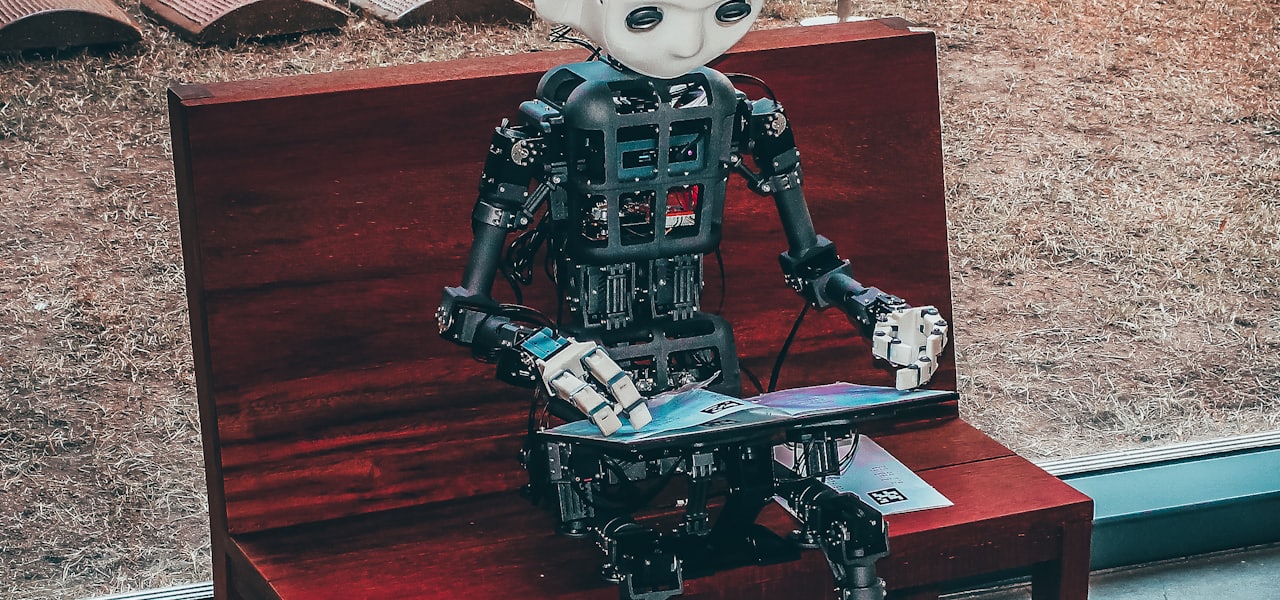
    Web science is an emerging interdisciplinary field concerned with the study of large-scale socio-technical systems, particularly the World Wide Web. It considers the relationship between people and technology, the ways that society and technology co-constitute one another and the impact of this co-constitution on broader society. Web Science combines research from disciplines as diverse as sociology, computer science, economics, and mathematics. The Web Science Institute, founded at the University of Southampton by director Wendy Hall and colleagues, describes Web Science as focusing "the analytical power of researchers from disciplines as diverse as mathematics, sociology, economics, psychology, law and computer science to understand and explain the Web. It is necessarily interdisciplinary – as much about social and organizational behaviour as about the underpinning technology." A central pillar of Web science development is Artificial Intelligence or "AI". The current artificial intelligence that in development at the moment is Human-Centered, with goals to further professional development courses as well as influencing public policy. Artificial intelligence developers are focused on the most impactful uses of this technology, while also hoping to expedite the growth and development of the human race. An early definition was given by American computer scientist Ben Shneiderman: "Web Science" is processing the information available on the web in similar terms to those applied to natural environment. == Areas of activity == === Emergent properties === Philip Tetlow, an IBM-based scientist influential in the emergence of web science as an independent discipline, argued for the concept of web life, which considers the Web not as a connected network of computers, as in common interpretations of the Internet, but rather as a sociotechnical machine capable of fusing together individuals and organisations into larger coordinated groups. It argues that unlike the technologies that have come before it, the Web is different in that its phenomenal growth and complexity are starting to outstrip our capability to control it directly, making it impossible for us to grasp its completeness in one go. Tetlow made use of Fritjof Capra's concept of the 'web of life' as a metaphor. == Research groups == There are numerous academic research groups engaged in Web Science research, many of which are members of WSTNet, the Web Science Trust Network of research labs. Health Web Science emerged as a sub-discipline of Web Science that studies the role of the Web's impact on human's health outcomes and how to further utilize the Web to improve health outcomes. These groups focus on the developmental possibilities, provided through Web Science, in areas such as health care and social welfare. Discussion of web science has been widely adopted as a method in which the internet can have a real world impact in the field of medicine, currently coined Medicine 2.0. The World Wide Web acts as a medium for the spread and circulation of knowledge, though these various research groups consider themselves responsible for maintaining verifiable and testable knowledge. Using their knowledge of the healthcare system as well as web science, researchers are focused on formatting and structuring their knowledge in a way that is easily accessible throughout the internet. The World Wide Web is quickly evolving meaning that the information we provide and its formatting must also. Recognizing the overlap between both aspects, the spread of knowledge and development of the internet, allows us to properly display our knowledge in a manner that evolves as quickly as the internet and everyday medical research. The accessibility of the internet and quick development of knowledge must be companied with efficient formatting to allocate successful dissemination of information, as described by these various researcher groups. == Related major conferences == Association for Computing Machinery (ACM), Hypertext Conference (HT) sponsored by SIGWEB ACM SIGCHI Conference on Human Factors in Computing Systems (CHI) International AAAI Conference on Weblogs and Social Media (ICWSM) The Web Conference (WWW) Association for Computing Machinery (ACM) Web Science Conference (WebSci)

    Read more →
  • Pull technology

    Pull technology

    Pull coding or client pull is a style of network communication, where the initial request for data originates from the client, and then is responded to by the server. The reverse is known as push technology, where the server pushes data to clients. Pull requests form the foundation of network computing, where many clients request data from centralized servers. Pull is used extensively on the Internet for HTTP page requests from websites. A push can also be simulated using multiple pulls within a short amount of time. For example, when pulling POP3 email messages from a server, a client can make regular pull requests, every few minutes. To the user, the email then appears to be pushed, as emails appear to arrive close to real-time. A trade-off of this system is that it places a heavier load on both the server and network to function correctly. Many web feeds, such as RSS are technically pulled by the client. With RSS, the user's RSS reader polls the server periodically for new content; the server does not send information to the client unrequested. This continual polling is inefficient and has contributed to the shutdown or reduction of several popular RSS feeds that could not handle the bandwidth. For solving this problem, the WebSub protocol, as another example of a push code, was devised. Podcasting is specifically a pull technology. When a new podcast episode is published to an RSS feed, it sits on the server until it is requested by a feed reader, mobile podcasting app, or directory. Directories such as Apple Podcasts (iTunes), The Blubrry Directory, and many apps' directories request the RSS feed periodically to update the Podcast's listing on those platforms. Subscribers to those RSS feeds via app or reader will get the episodes when they request the RSS feed next time, independent of when the directory listing updates.

    Read more →
  • Keyword extraction

    Keyword extraction

    Keyword extraction is tasked with the automatic identification of terms that best describe the subject of a document. Key phrases, key terms, key segments or just keywords are the terminology which is used for defining the terms that represent the most relevant information contained in the document. Although the terminology is different, function is the same: characterization of the topic discussed in a document. The task of keyword extraction is an important problem in text mining, information extraction, information retrieval and natural language processing (NLP). == Keyword assignment vs. extraction == Keyword assignment methods can be roughly divided into: keyword assignment (keywords are chosen from controlled vocabulary or taxonomy) and keyword extraction (keywords are chosen from words that are explicitly mentioned in original text). Methods for automatic keyword extraction can be supervised, semi-supervised, or unsupervised. Unsupervised methods can be further divided into simple statistics, linguistics or graph-based, or ensemble methods that combine some or most of these methods.

    Read more →
  • Extremely online

    Extremely online

    An extremely online (often capitalized), terminally online, or chronically online person is someone who is closely engaged with Internet culture. People said to be extremely online often believe that online posts are very important. Events and phenomena can themselves be extremely online; while often used as a descriptive term, the phenomenon of extreme online usage has been described as "both a reformation of the delivery of ideas – shared through words and videos and memes and GIFs and copypasta – and the ideas themselves". Here, "online" is used to describe "a way of doing things, not [simply] the place they are done". == Criteria == While the term was in use as early as 2014, it gained popularity over the latter half of the 2010s in conjunction with the increasing prevalence and notability of Internet phenomena in all areas of life. Extremely online people, according to The Daily Dot, are interested in topics "no normal, healthy person could possibly care about", and have been analogized to "pop culture fandoms, just without the pop". Extremely online phenomena such as fan culture and reaction GIFs have been described as "swallowing democracy" by journalists such as Amanda Hess in The New York Times, who claimed that a "great convergence between politics and culture, values and aesthetics, citizenship and commercialism" had become "a dominant mode of experiencing politics". Vulture – formerly the pop culture section of New York magazine, now a stand-alone website – has a section for articles tagged "extremely online". == Historical background == In the 2010s, many categories and labels came into wide use from media outlets to describe Internet-mediated cultural trends, such as the alt-right, the dirtbag left, and doomerism. These ideological categories are often defined by their close association with online discourse. For example, the term "alt-right" was added to the Associated Press' stylebook in 2016 to describe the "digital presence" of far-right ideologies, the dirtbag left refers to a group of "underemployed and overly online millennials" who "have no time for the pieties of traditional political discourse", and the doomer's "blackpilled despair" is combined with spending "too much time on message boards in high school" to produce an eclectic "anti-socialism". Extreme onlineness transcends ideological boundaries. For example, right-wing figures like Alex Jones and Laura Loomer have been described as "extremely online", but so have those on the left like Alexandria Ocasio-Cortez and fans of the Chapo Trap House podcast. Extremely online phenomena can range from acts of offline violence (such as the 2019 Christchurch shootings) to "[going] on NPR to explain the anti-capitalist irony inherent in kids eating Tide Pods". United States President Donald Trump's posts on social media have been frequently cited as extremely online, during both his presidency and his 2020 presidential campaign; Vox claimed his approach to re-election veered into being "Too Online", and Reason questioned whether the final presidential debate was "incomprehensible to normies". While individual people are often given the description, being extremely online has also been posited as an overall cultural phenomenon, applying to trends like lifestyle movements suffixed with "-wave" and "-core" based heavily on Internet media, as well as an increasing expectation for digital social researchers to have an "online presence" to advance in their careers. == Participants and media coverage == One example of a phenomenon considered to be extremely online is the "wife guy" (a guy who posts about his wife); despite being a "stupid online thing" which spent several years as a piece of Internet slang, in 2019 it became the subject of five articles in leading U.S. media outlets. Like many extremely online phrases and phenomena, the "wife guy" has been attributed in part to the in-character Twitter account dril. The account frequently parodies how people behave on the Internet, and has been widely cited as influential on online culture. In one tweet, his character refuses to stop using the Internet, even when someone shouts outside his house that he should log off. Many of dril's other coinages have become ubiquitous parts of Internet slang. Throughout the 2010s, posters such as dril inspired commonly used terms like "corncobbing" (referring to someone losing an argument and failing to admit it); while originally a piece of obscure Internet slang used on sites like Twitter, use of the term (and controversy over its misinterpretation) became a subject of reporting from traditional publications, with some noting that keeping up with the rapid turnover of inside jokes, memes, and quotes online required daily attention to avoid embarrassment. Twitch has been described as "talk radio for the extremely online". Another example of an event cited as extremely online is No Nut November. Increasingly, researchers are expected to have more of an online presence, to advance in their careers, as networking and portfolios continue to transition to the digital world. In November 2020, an article in The Washington Post criticized the filter bubble theory of online discourse on the basis that it "overgeneralized" based on a "small subset of extremely online people". The 2021 storming of the United States Capitol was described as extremely online, with "pro-Trump internet personalities", such as Baked Alaska, and fans livestreaming and taking selfies. People who have been described as extremely online include Chrissy Teigen, Jon Ossoff, and Andrew Yang. In contrast, Joe Biden has been cited as the antithesis of extremely online—The New York Times wrote in 2019 that he had "zero meme energy".

    Read more →
  • Ambient awareness

    Ambient awareness

    Ambient awareness (AmA) is a term used by social scientists to describe a form of peripheral social awareness through social media. This awareness is propagated from relatively constant contact with one's friends and colleagues via social networking platforms on the Internet. The term essentially defines the sort of omnipresent knowledge one experiences by being a regular user of these media outlets that allow a constant connection with one's social circle. According to Clive Thompson of The New York Times, ambient awareness is "very much like being physically near someone and picking up on mood through the little things; body language, sighs, stray comments". Academic Andreas Kaplan defines ambient awareness as "awareness created through regular and constant reception, and/or exchange of information fragments through social media". Two friends who regularly follow one another's digital information can already be aware of each other's lives without actually being physically present to have had a conversation. == Social == Socially speaking, ambient awareness and social media are products of the new generations who are being born or growing up in the digital age, starting circa 1998 and running to current times. Social media is personal media (what you're doing in the moment, how you feel, a picture of where you are) combined with social communication. Social media is the lattice work for ambient awareness. Without social media the state of ambient awareness cannot exist. Artificial Social Networking Intelligence (ASNI) refers to the application of artificial intelligence within social networking services and social media platforms. It encompasses various technologies and techniques used to automate, personalize, enhance, improve, and synchronize user's interactions and experiences within social networks. ASNI is expected to evolve rapidly, influencing how we interact online and shaping their digital experiences. Transparency, ethical considerations, media influence bias, and user control over data will be crucial to ensure responsible development and positive impact. A significant feature of social media is that it is created by those who also consume it. Mostly, those participating in this phenomenon are adolescents, college age, or young adult professionals. According to Dr. Mimi Ito, a cultural anthropologist and Professor in Residence at the University of California at Irvine, the mobile device is the greatest proxy device used to create and distribute Social Media. She reportedly states that "teenagers capture and produce their own media, and stay in constant ambient contact with each other..." using mobile devices. Usually while doing this they are consuming other forms of media such as music or video content via their smart phones, tablets, or other similar devices. Effectively this has led social scientists to believe that learning and multitasking will have a new face as the products of the digital generation enter the work force and begin to integrate their learning methods into the standard preexisting business models of today. Professors Kaplan and Haenlein see ambient awareness as one of the major reasons for the success of such microblogging sites as Twitter. == Origins == The earliest available technology that could be used for constant social contact is the cell phone. For the first time, people could be contacted readily and at will beyond the confines of their work or homes. Then later, with the additional service of texting, one can see the somewhat primitive form of the status update. Since the text message only allows for 160 characters to transmit pertinent information it paved the way for the status update as we know it today. The transition from only having a few points of regular long distance contact, to being constantly available via cell phone, is what primed society for social networking websites. Perhaps the first instance where these websites created the possibility of larger scale ambient awareness was when Facebook installed the news feed. The news feed automatically sends compiled information on all of a users contacts activities directly to them so that they can access all of the happenings in their world from one location. For the first time, becoming someone's Facebook friend was the equivalent of subscribing to a feed of their daily minutiae. Since this innovation, a new wave of micro-blogging services have emerged, such as Twitter or Tumblr. Although these services have often been criticized as containing seemingly meaningless snippets of information, when a follower gathers a certain amount of information, they begin to obtain an ambient understanding of who they are following. This has led to the mass usage of social media as not only a social tool but also as a marketing and business tool. == Uses in marketing == Websites such as Twitter, YouTube, Facebook, and Myspace, among many others, have been used by people in all forms of business to create a closer digital/ambient bond with their clientele base. This is most notably seen in the music industry where social media networking has become the mainstay of all advertising for independent and major artists. The effect of this type of ambient marketing is that the consumer begins to get a sense of the artist's life style and personality. In this way social media outlets and ambient awareness have managed to tighten the gap between consumers and producers in all areas of business. == Uses in business processes == As web-based collaboration tools and social project management suites proliferate, the addition of activity streams to those products help to create business context-specific ambient awareness, and produce a new class of products, such as social project management platforms.

    Read more →