DryvIQ is a software application that enables businesses to migrate on-site system files and associated data across storage and content management platforms, as well as create synchronized hybrid storage systems. == History == Before it was DryvIQ, the software SkySync was released in 2013 by Ann Arbor, Michigan based company, Portal Architects, Inc. The company created SkySync, a back-end, administrative application designed to transfer content across storage platforms, after abandoning 18 months of development on a desktop application called SkyBrary in 2011. Between 2014 and 2015, Portal Architects established partnerships with the following companies: Autodesk, Box, Dropbox, Egnyte, EMC, Google, Syncplicity, Huddle, IBM, Microsoft, OpenText, Oracle, Citrix ShareFile, Hightail and Internet2. SkySync (currently DryvIQ) was named a "Cool Vendor in Content Management" by Gartner in 2015. In 2022, SkySync changed its name to DryvIQ, which is now what the company is currently known as. == Overview == DryvIQ is a software application that syncs, migrates or backs up files including their associated properties, metadata, versions, user accounts and permissions across on-premises and Cloud-based storage platforms. The software deploys on a server, virtual machine or within Microsoft Azure, Amazon Web Services or other cloud computing services.
Stencil buffer
A stencil buffer is an extra data buffer, in addition to the color buffer and Z-buffer, found on modern graphics hardware. The buffer is per pixel and works on integer values, usually with a depth of one byte per pixel. The Z-buffer and stencil buffer often share the same area in the RAM of the graphics hardware. In the simplest case, the stencil buffer is used to limit the area of rendering (stenciling). More advanced usage of the stencil buffer makes use of the strong connection between the Z-buffer and the stencil buffer in the rendering pipeline. For example, stencil values can be automatically increased/decreased for every pixel that fails or passes the depth test. The simple combination of depth test and stencil modifiers make a vast number of effects possible (such as stencil shadow volumes, Two-Sided Stencil, compositing, decaling, dissolves, fades, swipes, silhouettes, outline drawing, or highlighting of intersections between complex primitives) though they often require several rendering passes and, therefore, can put a heavy load on the graphics hardware. The most typical application is still to add shadows to 3D applications. It is also used for planar reflections. Other rendering techniques, such as portal rendering, use the stencil buffer in other ways; for example, it can be used to find the area of the screen obscured by a portal and re-render those pixels correctly. The stencil buffer and its modifiers can be accessed in computer graphics by using APIs like OpenGL, Direct3D, Vulkan or Metal. == Architecture == The stencil buffer typically shares the same memory space as the Z-buffer, and typically the ratio is 24 bits for Z-buffer + 8 bits for stencil buffer or, in the past, 15 bits for Z-buffer + 1 bit for stencil buffer. Another variant is 4 + 24, where 28 of the 32 bits are used and 4 ignored. Stencil and Z-buffers are part of the frame buffer, coupled to the color buffer. The first chip available to a wider market was 3Dlabs' Permedia II, which supported a one-bit stencil buffer. The bits allocated to the stencil buffer can be used to represent numerical values in the range [0, 2n-1], and also as a Boolean matrix (n is the number of allocated bits), each of which may be used to control the particular part of the scene. Any combination of these two ways of using the available memory is also possible. == Stencil test == Stencil test or stenciling is among the operations on the pixels/fragments (Per-pixel operations), located after the alpha test, and before the depth test. The stencil test ensures undesired pixels do not reach the depth test. This saves processing time for the scene. Similarly, the alpha test can prevent corresponding pixels to reach the stencil test. The test itself is carried out over the stencil buffer to some value in it, or altered or used it, and carried out through the so-called stencil function and stencil operations. The stencil function is a function by which the stencil value of a certain pixel is compared to a given reference value. If this comparison is logically true, the stencil test passes. Otherwise not. In doing so, the possible reaction caused by the result of comparing three different state-depth and stencil buffer: Stencil test is not passed Stencil test is passed but not the depth test Both tests are passed (or stencil test is passed, and the depth is not enabled) For each of these cases, different operations can be set over the examined pixel. In the OpenGL stencil functions, the reference value and mask, respectively, define the function glStencilFunc. In Direct3D each of these components is adjusted individually using methods SetRenderState devices currently in control. This method expects two parameters, the first of which is a condition that is set and the other its value. In the order that was used above, these conditions are called D3DRS_STENCILFUNC, D3DRS_STENCILREF, and D3DRS_STENCILMASK. Stencil operations in OpenGL adjust glStencilOp function that expects three values. In Direct3D, again, each state sets a specific method SetRenderState. The three states that can be assigned to surgery are called D3DRS_STENCILFAIL, D3DRENDERSTATE_STENCILZFAIL, and D3DRENDERSTATE_STENCILPASS. == Z-fighting == Due to the lack of precision in the Z-buffer, coplanar polygons that are short-range, or overlapping, can be portrayed as a single plane with a multitude of irregular cross-sections. These sections can vary depending on the camera position and other parameters and are rapidly changing. This is called Z-fighting. There exist multiple solutions to this issue: - Bring the far plane closer to restrict the scene's depth, thus increasing the accuracy of the Z-buffer, or reducing the distance at which objects are visible in the scene. - Increase the number of bits allocated to the Z-buffer, which is possible at the expense of memory for the stencil buffer. - Move polygons farther apart from one another, which restricts the possibilities for the artist to create an elaborate scene. All of these approaches to the problem can only reduce the likelihood that the polygons will experience Z-fighting, and do not guarantee a definitive solution in the general case. A solution that includes the stencil buffer is based on the knowledge of which polygon should be in front of the others. The silhouette of the front polygon is drawn into the stencil buffer. After that, the rest of the scene can be rendered only where the silhouette is negative, and so will not clash with the front polygon. == Shadow volume == Shadow volume is a technique used in 3D computer graphics to add shadows to a rendered scene. They were first proposed by Frank Crow in 1977 as the geometry describing the 3D shape of the region occluded from a light source. A shadow volume divides the virtual world in two: areas that are in shadow and areas that are not. The stencil buffer implementation of shadow volumes is generally considered among the most practical general-purpose real-time shadowing techniques for use on modern 3D graphics hardware. It has been popularised by the video game Doom 3, and a particular variation of the technique used in this game has become known as Carmack's Reverse. == Reflections == Reflection of a scene is drawn as the scene itself transformed and reflected relative to the "mirror" plane, which requires multiple render passes and using of stencil buffer to restrict areas where the current render pass works: Draw the scene excluding mirror areas – for each mirror lock the Z-buffer and color buffer Render visible part of the mirror Depth test is set up so that each pixel is passed to enter the maximum value and always passes for each mirror: Depth test is set so that it passes only if the distance of a pixel is less than the current (default behavior) The matrix transformation is changed to reflect the scene relative to the mirror plane Unlock the Z-buffer and color buffer Draw the scene, but only the part of it that lies between the mirror plane and the camera. In other words, a mirror plane is also a clipping plane Again locks color buffer, depth test is set so that it always passes, reset stencil for the next mirror. == Planar Shadows == While drawing a plane of shadows, there are two dominant problems: The first concerns the problem of deep struggle in case the flat geometry is not awarded on the part covered with the shadow of shadows and outside. See the section that relates to this. Another problem relates to the extent of the shadows outside the area where the plane there. Another problem, which may or may not appear, depending on the technique, the design of more polygons in one part of the shadow, resulting in darker and lighter parts of the same shade. All three problems can be solved geometrically, but because of the possibility that hardware acceleration is directly used, it is a far more elegant implementation using the stencil buffer: 1. Enable lights and the lights 2. Draw a scene without any polygon that should be projected shadows 3. Draw all polygons which should be projected shadows, but without lights. In doing so, the stencil buffer, the pixel of each polygon to be assigned to a specific value for the ground to which they belong. The distance between these values should be at least two, because for each plane to be used two values for two states: in the shadows and bright. 4. Disable any global illumination (to ensure that the next steps will affect only individual selected light) For each plane: For each light: 1. Edit a stencil buffer and only the pixels that carry a specific value for the selected level. Increase the value of all the pixels that are projected objects between the date of a given level and bright. 2. Allow only selected light for him to draw level at which part of her specific value was not changed. == Spatial shadows == Stencil buffer implementation of spatial drawing shadows is any shadow of a geometric body that its volume includes part of the scene that is
Artificial consciousness
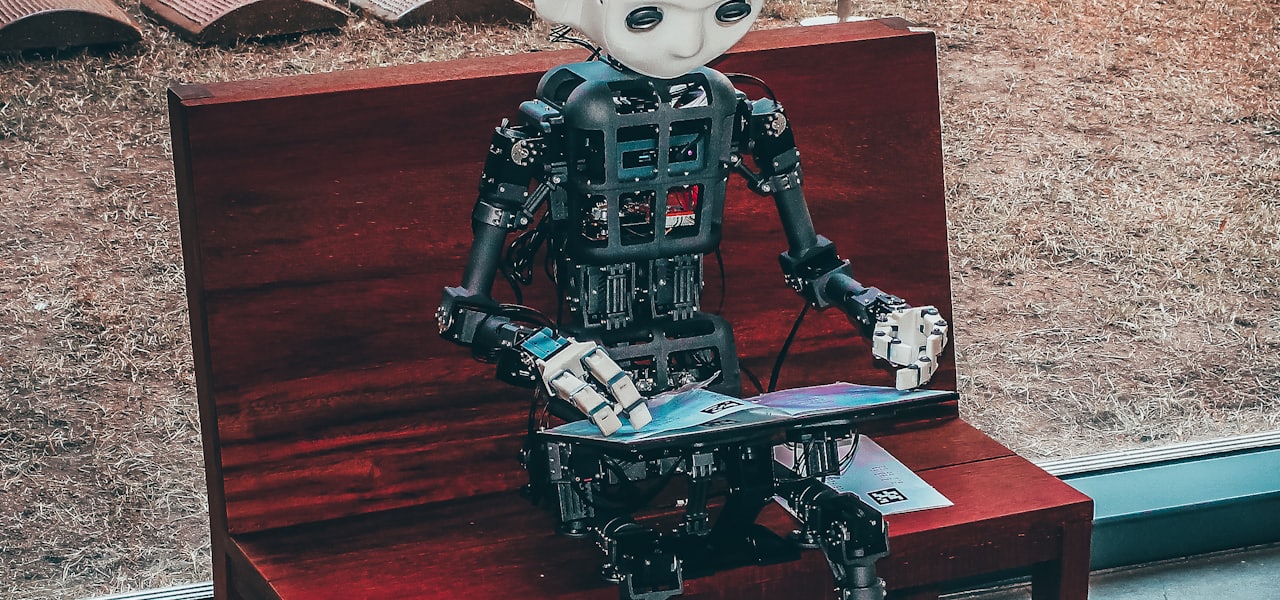
Artificial consciousness, also known as machine consciousness, synthetic consciousness, or digital consciousness, is consciousness hypothesized to be possible for artificial intelligence. It is also the corresponding field of study, which draws insights from philosophy of mind, philosophy of artificial intelligence, cognitive science and neuroscience. The term "sentience" can be used when specifically designating ethical considerations stemming from a form of phenomenal consciousness (P-consciousness, or the ability to feel qualia). Since sentience involves the ability to experience ethically positive or negative (i.e., valenced) mental states, it may justify welfare concerns and legal protection, as with non-human animals. Some scholars believe that consciousness is generated by the interoperation of various parts of the brain; these mechanisms are labeled the neural correlates of consciousness (NCC). Some further believe that constructing a system (e.g., a computer system) that can emulate this NCC interoperation would result in a system that is conscious. Some scholars reject the possibility of non-biological conscious beings. == Philosophical views == As there are many hypothesized types of consciousness, there are many potential implementations of artificial consciousness. In the philosophical literature, perhaps the most common taxonomy of consciousness is into "access" and "phenomenal" variants. Access consciousness concerns those aspects of experience that can be apprehended, while phenomenal consciousness concerns those aspects of experience that seemingly cannot be apprehended, instead being characterized qualitatively in terms of "raw feels", "what it is like" or qualia. === Plausibility debate === Type-identity theorists and other skeptics hold the view that consciousness can be realized only in particular physical systems because consciousness has properties that necessarily depend on physical constitution. In his 2001 article "Artificial Consciousness: Utopia or Real Possibility," Giorgio Buttazzo says that a common objection to artificial consciousness is that, "Working in a fully automated mode, they [the computers] cannot exhibit creativity, unreprogrammation (which means can 'no longer be reprogrammed', from rethinking), emotions, or free will. A computer, like a washing machine, is a slave operated by its components." For other theorists (e.g., functionalists), who define mental states in terms of causal roles, any system that can instantiate the same pattern of causal roles, regardless of physical constitution, will instantiate the same mental states, including consciousness. ==== Thought experiments ==== David Chalmers proposed two thought experiments intending to demonstrate that "functionally isomorphic" systems (those with the same "fine-grained functional organization", i.e., the same information processing) will have qualitatively identical conscious experiences, regardless of whether they are based on biological neurons or digital hardware. The "fading qualia" is a reductio ad absurdum thought experiment. It involves replacing, one by one, the neurons of a brain with a functionally identical component, for example based on a silicon chip. Chalmers makes the hypothesis, knowing it in advance to be absurd, that "the qualia fade or disappear" when neurons are replaced one-by-one with identical silicon equivalents. Since the original neurons and their silicon counterparts are functionally identical, the brain's information processing should remain unchanged, and the subject's behaviour and introspective reports would stay exactly the same. Chalmers argues that this leads to an absurd conclusion: the subject would continue to report normal conscious experiences even as their actual qualia fade away. He concludes that the subject's qualia actually don't fade, and that the resulting robotic brain, once every neuron is replaced, would remain just as sentient as the original biological brain. Similarly, the "dancing qualia" thought experiment is another reductio ad absurdum argument. It supposes that two functionally isomorphic systems could have different perceptions (for instance, seeing the same object in different colors, like red and blue). It involves a switch that alternates between a chunk of brain that causes the perception of red, and a functionally isomorphic silicon chip, that causes the perception of blue. Since both perform the same function within the brain, the subject would not notice any change during the switch. Chalmers argues that this would be highly implausible if the qualia were truly switching between red and blue, hence the contradiction. Therefore, he concludes that the equivalent digital system would not only experience qualia, but it would perceive the same qualia as the biological system (e.g., seeing the same color). Greg Egan's short story Learning To Be Me (mentioned in §In fiction), illustrates how undetectable duplication of the brain and its functionality could be from a first-person perspective. Critics object that Chalmers' proposal begs the question in assuming that all mental properties and external connections are already sufficiently captured by abstract causal organization. Van Heuveln et al. argue that the dancing qualia argument contains an equivocation fallacy, conflating a "change in experience" between two systems with an "experience of change" within a single system. Mogensen argues that the fading qualia argument can be resisted by appealing to vagueness at the boundaries of consciousness and the holistic structure of conscious neural activity, which suggests consciousness may require specific biological substrates rather than being substrate-independent. Anil Seth argues that the complexity of brain neurons intrinsically matters in addition to their function and that it is not possible to replace any part of the brain with a perfect silicon equivalent. He points out that some of biological neurons exhibit activity aimed at cleaning up metabolic waste products, and writes that a perfect silicon replacement would require a silicon-based metabolism, but silicon is not suitable for creating such artificial metabolism. ==== In large language models ==== In 2022, Google engineer Blake Lemoine made a viral claim that Google's LaMDA chatbot was sentient. Lemoine supplied as evidence the chatbot's humanlike answers to many of his questions; however, the chatbot's behavior was judged by the scientific community as likely a consequence of mimicry, rather than machine sentience. Lemoine's claim was widely derided for being ridiculous. Moreover, attributing consciousness based solely on the basis of LLM outputs or the immersive experience created by an algorithm is considered a fallacy. However, while philosopher Nick Bostrom states that LaMDA is unlikely to be conscious, he additionally poses the question of "what grounds would a person have for being sure about it?" One would have to have access to unpublished information about LaMDA's architecture, and also would have to understand how consciousness works, and then figure out how to map the philosophy onto the machine: "(In the absence of these steps), it seems like one should be maybe a little bit uncertain. [...] there could well be other systems now, or in the relatively near future, that would start to satisfy the criteria." David Chalmers argued in 2023 that LLMs today display impressive conversational and general intelligence abilities, but are likely not conscious yet, as they lack some features that may be necessary, such as recurrent processing, a global workspace, and unified agency. Nonetheless, he considers that non-biological systems can be conscious, and suggested that future, extended models (LLM+s) incorporating these elements might eventually meet the criteria for consciousness, raising both profound scientific questions and significant ethical challenges. However, the view that consciousness can exist without biological phenomena is controversial and some reject it. Kristina Šekrst cautions that anthropomorphic terms such as "hallucination" can obscure important ontological differences between artificial and human cognition. While LLMs may produce human-like outputs, she argues that it does not justify ascribing mental states or consciousness to them. Instead, she advocates for an epistemological framework (such as reliabilism) that recognizes the distinct nature of AI knowledge production. She suggests that apparent understanding in LLMs may be a sophisticated form of AI hallucination. She also questions what would happen if an LLM were trained without any mention of consciousness. === Testing === Sentience is an inherently first-person phenomenon. Because of that, and due to the lack of an empirical definition of sentience, directly measuring it may be impossible. Although systems may display numerous behaviors correlated with sentience, determining whether a system is sentient is known as the hard pr
Hello World: How to be Human in the Age of the Machine
Hello World: How to Be Human in the Age of the Machine (also titled Hello World: Being Human in the Age of Algorithms) is a book on the growing influence of algorithms and artificial intelligence (AI) on human life, authored by mathematician and science communicator Hannah Fry. The book examines how algorithms are increasingly shaping decisions in critical areas such as healthcare, transportation, justice, finance, and the arts. == Overview == Fry uses real-world examples, such as driverless cars and predictive policing, to illustrate her points. She emphasizes that algorithms are not inherently objective; they reflect biases embedded in their design and data inputs. While acknowledging their potential to improve efficiency and accuracy, Fry cautions against over-reliance on machines without human judgment. Fry explores moral questions surrounding algorithmic decision-making, such as whether machines can replace human empathy in critical situations. She advocates for greater scrutiny of algorithms to ensure fairness and avoid harmful biases. The book proposes a "cyborg future", where humans work alongside algorithms to enhance decision-making while retaining ultimate control. == Reception == Hello World has been praised for its clarity, engaging storytelling, and balanced perspective. Critics have highlighted Fry's ability to make complex topics accessible to general audiences while raising important questions about technology's impact on society. The book was shortlisted for awards such as the 2018 Baillie Gifford Prize and the Royal Society Science Book Prize.
Superintelligence ban
Superintelligence ban refers to proposed legal, ethical, or policy measures intended to restrict or prohibit the development of artificial superintelligence, AI systems that would surpass human cognitive abilities in nearly all domains. The idea arises from concerns that such systems could become uncontrollable, potentially posing existential threats to humanity or causing severe social and economic disruption. == Background == The concept of limiting or banning superintelligence research has roots in early 21st-century debates on artificial general intelligence (AGI) safety. Thinkers such as Nick Bostrom and Eliezer Yudkowsky warned that self-improving AI could rapidly exceed human oversight. As advanced models like large-scale language models and autonomous agents began demonstrating complex reasoning abilities, policymakers and ethicists increasingly discussed the need for legal constraints on the creation of systems capable of recursive self-improvement. In October 2025, the Future of Life Institute published a statement calling for "a prohibition on the development of superintelligence, not lifted before there is broad scientific consensus that it will be done safely and controllably, and strong public buy-in." This statement was signed by various public personalities, such as Richard Branson and Steve Wozniak, and AI experts, such as Yoshua Bengio and Geoffrey Hinton. == Rationale == Supporters of a superintelligence ban argue that once AI systems surpass human intelligence, traditional containment, alignment, and control methods may fail. They contend that even limited experimentation with such systems could lead to irreversible outcomes, including loss of human decision-making power or unintended global harm. Some propose international treaties modeled after the nuclear non-proliferation framework to prevent a competitive AI arms race. Opponents argue that a ban would be difficult to define and enforce, given the lack of a precise threshold distinguishing advanced AGI from superintelligence. They also warn that excessive restriction could slow scientific progress, hinder beneficial automation, and encourage unregulated underground research. == Global discussion == Although no government has enacted an explicit superintelligence ban, the idea has been debated within the European Union, United Nations, and several independent AI safety organizations. The Future of Life Institute, Center for AI Safety, and other organizations have called for international cooperation to manage risks associated with the pursuit of superintelligent systems. In 2024 and 2025, proposals for a temporary moratorium on frontier AI research were circulated among major technology firms and research institutes, reflecting growing public concern over the trajectory of AI capabilities.
CrewAI
CrewAI is an open-source software framework and platform for building AI agents and multi-agent systems. Written primarily in Python, it is used to define artificial-intelligence agents, assign tasks to them, and coordinate their work through agent teams and workflows. The framework is associated with CrewAI Inc., a startup developing enterprise tools for automating business workflows with large language model-based agents. == History == CrewAI was first released on the Python Package Index in December 2023. The project was created by João Moura and later developed by CrewAI Inc. and open-source contributors. In October 2024, TechCrunch reported that CrewAI had raised $18 million across seed and Series A funding rounds from investors including Boldstart Ventures, Craft Ventures, Earl Grey Capital, and Insight Partners. The report also stated that Andrew Ng and HubSpot co-founder Dharmesh Shah had invested in the company. SiliconANGLE described the company as the developer of an open-source framework for building artificial-intelligence agents and reported that the funding consisted of a seed round led by Boldstart Ventures and a Series A led by Insight Partners. By late 2024, CrewAI had introduced commercial enterprise products built on top of its open-source components. TechCrunch reported that the company's enterprise offering added access controls, analytics, support, and templates for workflow automation. == Features == CrewAI is designed around groups of agents, sometimes called "crews", that can be assigned roles, goals, and tasks. The framework supports agent collaboration, task delegation, tool use, memory, and knowledge sources for retrieval-augmented generation workflows. The project describes two main building blocks: "Crews", which are used for autonomous agent collaboration, and "Flows", which are used for more controlled event-driven workflows. The framework is independent of LangChain and is released under the MIT License. It can be installed as a Python package and is commonly used with external large language model APIs or local models, depending on the developer's configuration. == Business model == CrewAI combines an open-source framework with commercial enterprise products. Its enterprise products are intended for organizations that need to build, monitor, and manage agent-based automations with additional security, observability, and administrative controls.
Comparison of machine learning software
The following tables are a comparison of machine learning software such as software frameworks, libraries, and computer programs used for machine learning. == Machine learning software == == Other comparisons == == Machine learning helper libraries and platforms == Apache OpenNLP — natural language processing toolkit CUDA — GPU computing platform used to accelerate machine learning and deep learning workloads Horovod — distributed training framework for deep learning Hugging Face Transformers — library of pretrained transformer models built on other machine learning frameworks Kubeflow — machine learning platform for Kubernetes Mallet — toolkit for natural language processing and text analysis NumPy — numerical computing library used in machine learning OpenCV — computer vision library with machine learning functions ONNX — open format for representing machine learning models pandas — data analysis and data preparation library used in machine learning PlaidML — tensor compiler and backend for machine learning frameworks Polars — Dataframe library used for machine learning data preparation and analysis PyArrow — columnar data library used in machine learning data processing ROOT (TMVA) — data analysis framework with machine learning tools SciPy — scientific computing and optimization library used in machine learning == Online development environments for machine learning == Google Colab — hosted Jupyter Notebook environment commonly used for machine learning and deep learning JupyterLab — notebook-based development environment for machine learning and data science Jupyter Notebook — interactive notebook environment used for machine learning and data science Kaggle — online data science and machine learning platform